
Outlet, Switch and Wiring Repairs
Electrical trouble usually shows itself at an outlet, a switch or a light: an outlet gone dead, a breaker that will not stay on, a switch plate turning brown. The cause sits behind the plate, in a loose connection, a worn device or wiring that has outlived the house, and a lasting repair starts by finding it.
Signs an Outlet or Switch Is Failing
Some faults give warning before they fail. Treat any of these as a reason to stop using the outlet or circuit and have it checked:
- An outlet, a switch or a cover plate that feels warm, or a plug that comes out hot
- Lights that flicker or dim, in one room or across the house
- A burning or hot-plastic smell with no clear source
- Buzzing, crackling or sizzling from an outlet, a switch or the panel
- Brown or black marks around an outlet’s slots or on a switch
- Outlets so worn that plugs slip out on their own
- A tingle or a small shock from a switch plate or an appliance
Problems, Causes and What You Can Safely Try
A few faults have a simple step you can try once; the rest mean opening a box with live wiring inside it.
Swipe left to see the rest of the table.
| Problem | What it can indicate | Safe to try yourself? | When to call |
|---|---|---|---|
| Dead outlet | A tripped GFCI outlet (one with Test and Reset buttons) elsewhere on the circuit, a tripped breaker or a loose wire | Yes. Press Reset on nearby GFCI outlets, then check the panel. | If nothing comes back, or it died after a flicker or a smell |
| Breaker that trips again | Too much load on the circuit, a short, or a damaged cord or appliance | Once. Unplug the heavier loads and reset it a single time. | If it trips again with little plugged in |
| Flickering lights | In one fixture, a loose bulb or a mismatched dimmer; across rooms, a loose connection | Tighten the bulb with the switch off, or try one made for dimmers. | When the flicker reaches more than one room |
| Warm outlet or switch | A loose connection, a worn device or a heavy load such as a space heater | Unplug what is on it and stop using it. | Soon, and right away if the plate is discolored |
| Burned or melted switch | Arcing at a worn switch or a loose terminal | No. Turn its breaker off and leave it alone. | Right away, before the circuit is used again |
| Two-prong outlets | Wiring from before grounded outlets were standard | Not the outlet itself: a three-prong outlet on an ungrounded circuit only looks grounded. | When anything with a three-prong plug needs a proper outlet |
Repeated Trips and Flicker Across Rooms
A breaker that trips is doing its job: it opens the circuit before the wire overheats. One trip after a space heater and a hair dryer met on the same circuit is not a fault; repeated trips are a symptom. Each pattern of trips tends to point to its own cause, and it pays to read the pattern and reset the breaker safely before calling.
Lights that dip for a moment as the air conditioner starts can be normal on a busy circuit. Flicker that moves through several rooms, or lights that brighten while others dim, points to a loose connection on a neutral wire or at the service, and it should be checked promptly.
Two-Prong Outlets and Plaster Walls
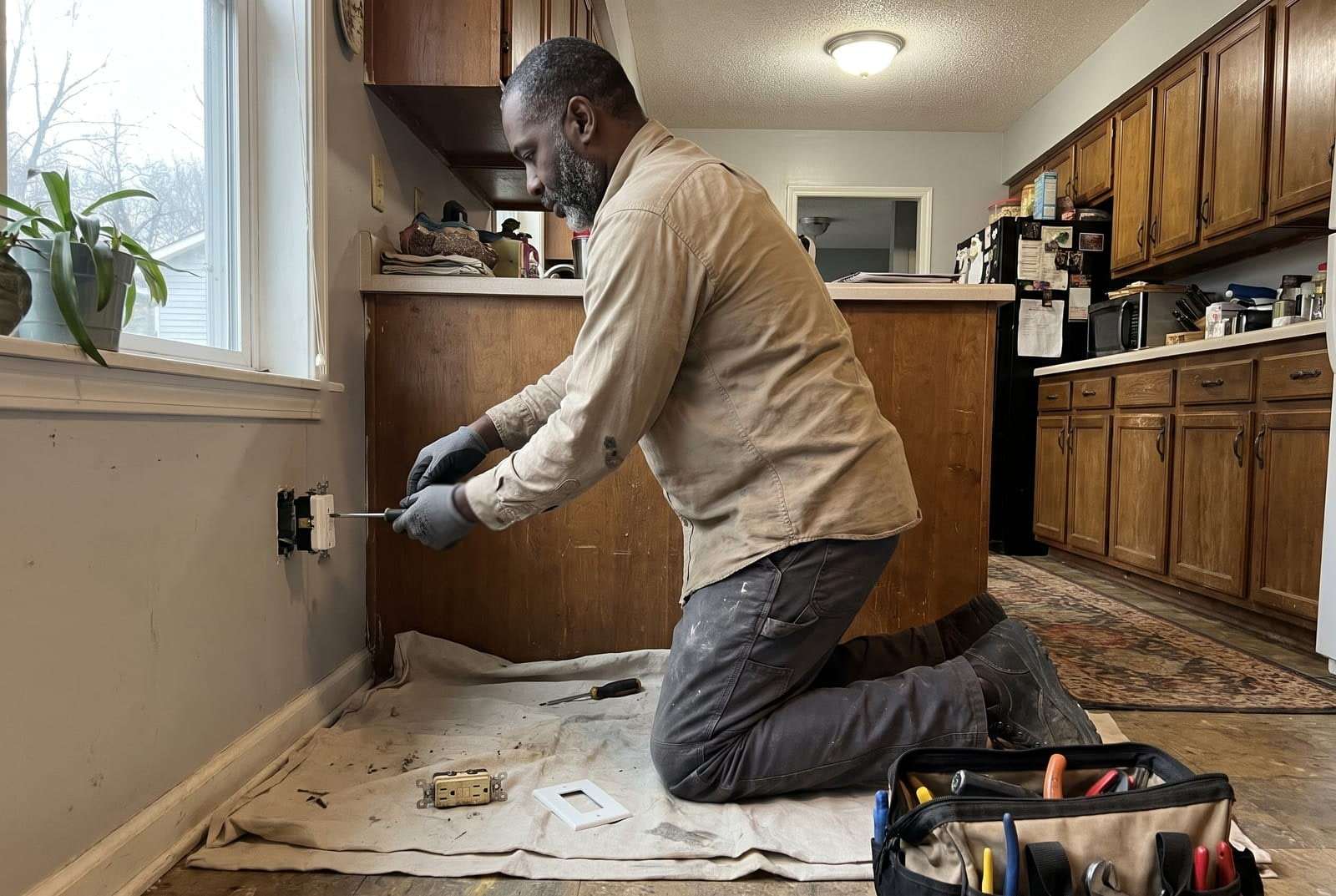
Much of Akron’s housing went up before 1960, and behind the plaster many of those houses still have ungrounded two-prong outlets. An adapter plug does not give a three-prong plug a ground. Depending on what the wall holds, a ground wire is brought to the box or the old cable is replaced with grounded cable. Where neither is practical, a GFCI outlet protects people from shock, and it is marked “No Equipment Ground” because it does not create one.
Pulling new cable through finished walls takes patience more than demolition. Plaster and lath crack easily, so an electrician usually works from the basement and the attic and opens the wall only in a few small, chosen places. A house still on a fuse box often needs a panel upgrade before new circuits have anywhere to go.
GFCI outlets also belong wherever water is close: kitchen counters, bathrooms, the laundry, the garage, an unfinished basement and outdoors.
Warm Outlets, GFCIs and Older Wiring
Why does an outlet feel warm?
An outlet or a switch plate should not feel warmer than the wall around it. Warmth usually means a loose connection or a worn device, and a loose connection turns current into heat, which loosens it further. Unplug what is on it, stop using it, and switch off its breaker if the plate is hot or discolored. The repair opens the box and checks every connection in it.
What does a GFCI outlet do that an ordinary outlet does not?
It compares the current going out with the current coming back. When they differ by a few thousandths of an amp, as when current leaks through a person, it cuts the power in a fraction of a second; an ordinary outlet relies on the breaker, which reacts only to overloads and shorts. One GFCI can protect the outlets wired after it, which is why a dead bathroom outlet sometimes comes back with a Reset button in another room.
Is cloth-covered or aluminum wiring dangerous?
Not on its own, but both deserve a closer look. Cloth-covered cable, found in many houses wired before the 1960s, has rubber insulation that turns brittle with age and heat, especially at light fixtures, and usually no ground. Aluminum wiring from the late 1960s and early 1970s can overheat at connections not made with devices meant for it. A check of the connections shows whether a repair will do or the circuit needs rewiring.
Is replacing a light switch a safe job to do yourself?
A like-for-like swap of an ordinary single switch is a job many homeowners take on, with the breaker off and a tester confirming the wires are dead. Stop and call if the wires are brittle, aluminum or scorched, if the box holds more cables than expected, or if the switch is one of two controlling the same light. Smart switches and many dimmers also need a neutral wire that older boxes often lack.
The Stages of a Typical Repair
- The first visit. The property is walked, the outlets and circuits are tested, and you are told what was found and what the repair will involve.
- Tracing the fault. The problem is followed from the symptom back to its cause before anything is opened or replaced.
- Making the circuit safe. The breaker goes off, and a tester confirms the wires are dead.
- The repair. Worn devices are replaced, loose connections remade on clean wire, and damaged cable cut back or replaced.
- Testing with the power on. Each outlet is checked for correct wiring and ground, and GFCI outlets are tripped and reset.
- A label that matches. If the repair changes what a breaker feeds, its panel label changes too.
Have an Outlet or Circuit Checked
Describe what the outlet, switch or light is doing and where it is in the house, and the fault can be traced from there.