
Panel Upgrades and Service Changes
Many Akron houses still run on the fuse box or small panel they were built with, long before central air, electric dryers and electric cars. A panel upgrade gives the house room for what it runs today, with protection matched to every circuit.
Replacing the Panel or Raising the Amperage
The two jobs are often confused. A panel replacement swaps the box and its fuses or breakers for a new panel of the same capacity, the answer to a worn or unsafe panel, a fuse box or a panel with no spaces left. A service upgrade raises how much power the house can draw from the utility, usually from 60 or 100 amps to 200, and changes equipment outside the house as well.
Which one a house needs comes down to its loads. A house with gas heat, a gas range and no central air can live comfortably on 100 amps; one adding a heat pump, an electric range or an EV charger may need 200. A load calculation settles it.
What to Watch for at the Panel
A panel rarely fails without warning. Any of these is worth a closer look:
- A fuse box, or fuses that blow when two appliances run at once
- A main breaker that trips, or branch breakers that trip with ordinary use
- A cover that feels warm, buzzes or smells of hot plastic
- Rust, water stains or corrosion on the cover or inside the box
- Scorched breakers, or wires darkened where they land
- No empty spaces, or rows of twin breakers squeezed into the slots
- A panel make with a poor record in the trade
- A directory that is blank, faded or no longer matches the circuits
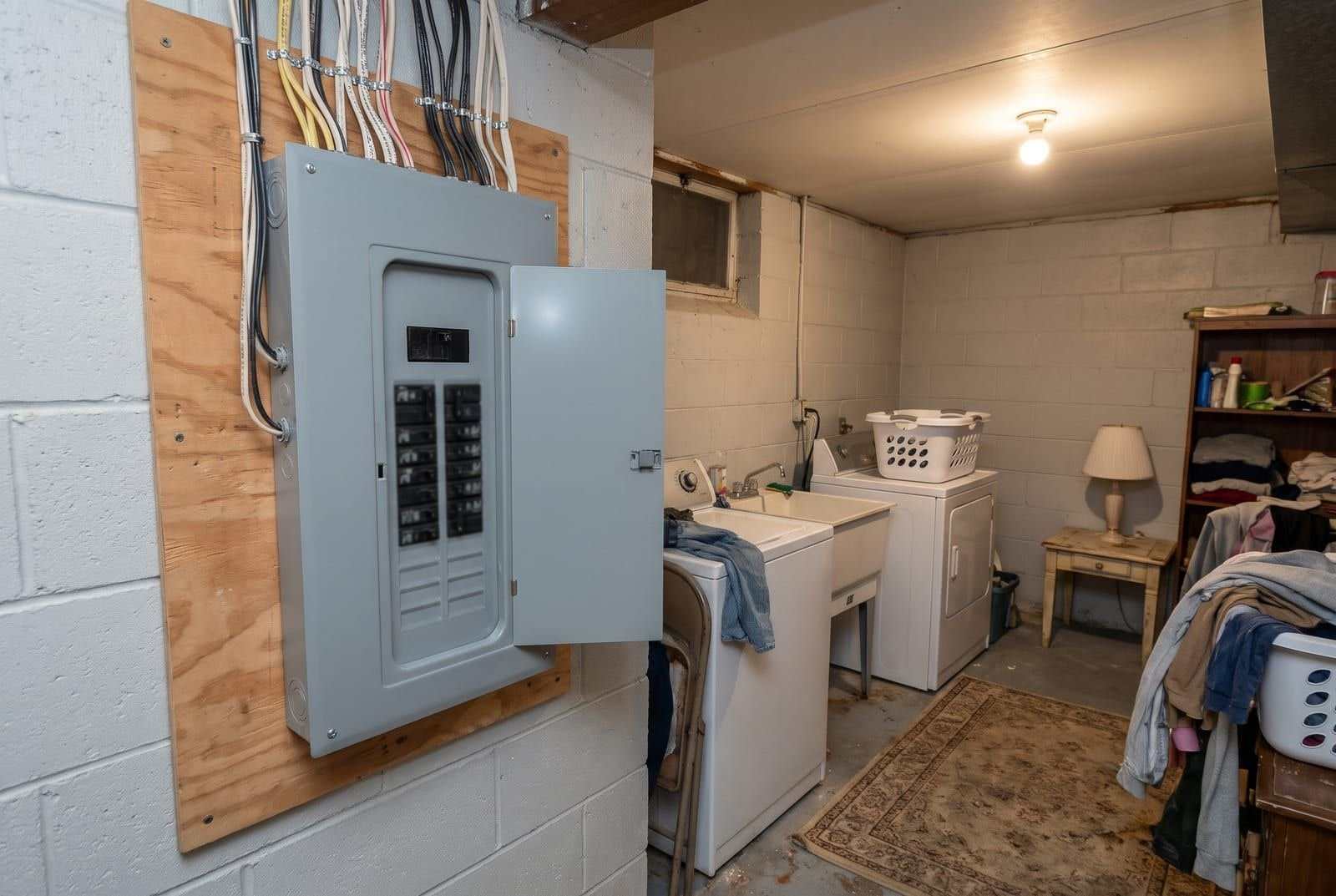
A panel in an unfinished basement lives through Northeast Ohio’s humid summers year after year, and rust on the outside of the cover often means rust on the connections inside.
Reasons to Upgrade and What Changes
An upgrade usually starts with a change in the house rather than a fault in the panel, and each change brings its own work.
Swipe left to see the rest of the table.
| Reason to upgrade | What changes | Related project |
|---|---|---|
| A fuse box still in service | Fuses give way to breakers, with room for grounding and ground-fault protection | Grounded outlets in place of two-prong ones |
| No spaces left in the panel | A larger panel, or a second panel fed from the main one | New circuits for a kitchen or a basement |
| An electric car on the way | A 240-volt circuit sized to the charger, and sometimes a larger service | EV charger wiring |
| Central air or a heat pump | Capacity for a large load that runs for long stretches | A circuit and a disconnect for the outdoor unit |
| A kitchen or basement remodel | Several new circuits at once | Recessed lighting and new fixtures |
| Backup power for storm season | Space and a breaker for a generator connection, with an interlock or a transfer switch | A generator hookup and a surge protector |
Fuse Boxes, Full Panels and Older Brands
Does a fuse box that still works need to be replaced?
Not simply because it uses fuses: a fuse of the right size protects a wire well. The trouble is that fuse boxes have few circuits and little capacity, and it is easy to screw in a larger fuse than the wire can carry, which lets the wire overheat without the fuse ever blowing. Replacing one is also the natural time to add grounding and GFCI protection.
What does a service upgrade change outside the house?
Usually the meter base, the service entrance cable or the mast that carries it up the wall, and the connection to the utility’s line. The grounding is brought up to date too, with ground rods and a bond to a metal water pipe where there is one. The utility disconnects the house for the work and reconnects it at the meter afterward.
Can more circuits be added to a panel that is full?
Sometimes. Some panels accept twin breakers in certain slots, as the label inside the door shows, which can open up a space or two. Past that, the choice is a larger panel or a second one fed from the main panel. Either way, the first question is whether the service has room for the new load, since empty spaces in a panel are not the same as spare capacity.
Are some older panel brands unsafe?
A few panel lines installed between the 1950s and the 1980s have a poor record in the trade, mainly breakers that may not trip on an overload and connections that loosen and overheat. Not every one of them has failed, but a breaker that will not trip gives no warning until the day it matters. If the label inside the door is unfamiliar or worn away, have the panel identified and checked.
Room in the Panel for New Circuits
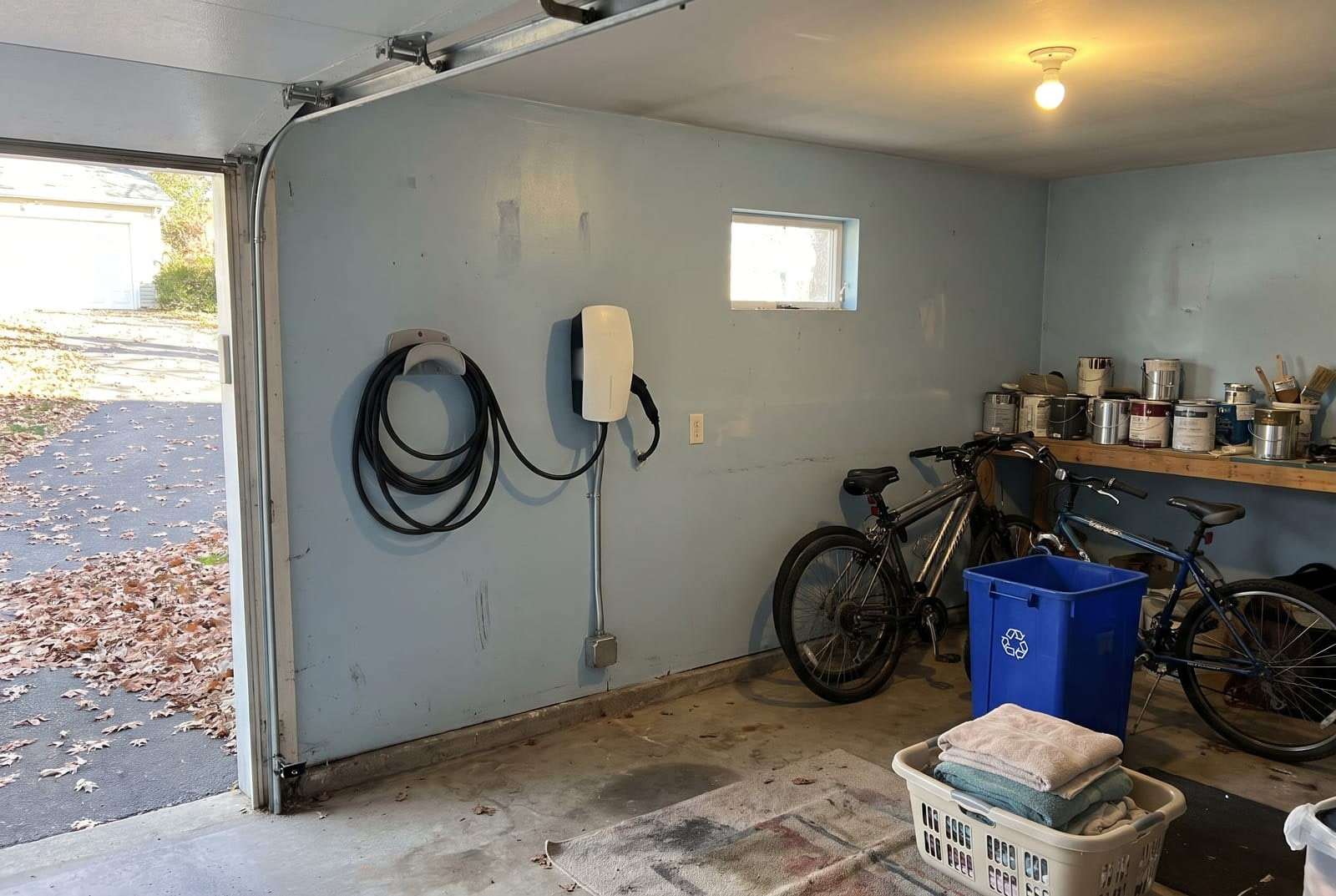
New circuits are the other half of panel work. A kitchen remodel can add several at once, for the countertop outlets, the dishwasher, the microwave and the range, and a finished basement needs its own for lights and outlets. Each one takes a space in the panel and part of the service’s capacity.
An EV charger is a large load that runs for hours at a time, usually overnight, on a 240-volt circuit sized to the charger. On a small service it is often the load that tips the balance toward an upgrade, and a new panel, a larger service and a second panel are worth weighing side by side before choosing.
How a Panel Upgrade Usually Proceeds
- The first visit. The property is walked, the outlets and circuits are tested, and you are told what was found and what the upgrade will involve.
- Sizing the service. The loads the house runs now and the ones planned are added up, which settles whether a new panel will do or the service should grow.
- Permit and utility. Many panel and service jobs need a permit and an inspection from the local building department. A service upgrade also needs Ohio Edison, the utility for most of the Akron area, to disconnect the power at the meter and reconnect it afterward.
- The changeover. With the power off, the old panel comes out and each circuit moves to a new breaker matched to its wire.
- Grounding and protection. Grounding and bonding are brought up to date, with ground-fault and arc-fault protection where the circuits call for it.
- Testing and labeling. Every circuit is tested with the power back on and labeled in the panel directory.
What a Good Panel Job Leaves Behind
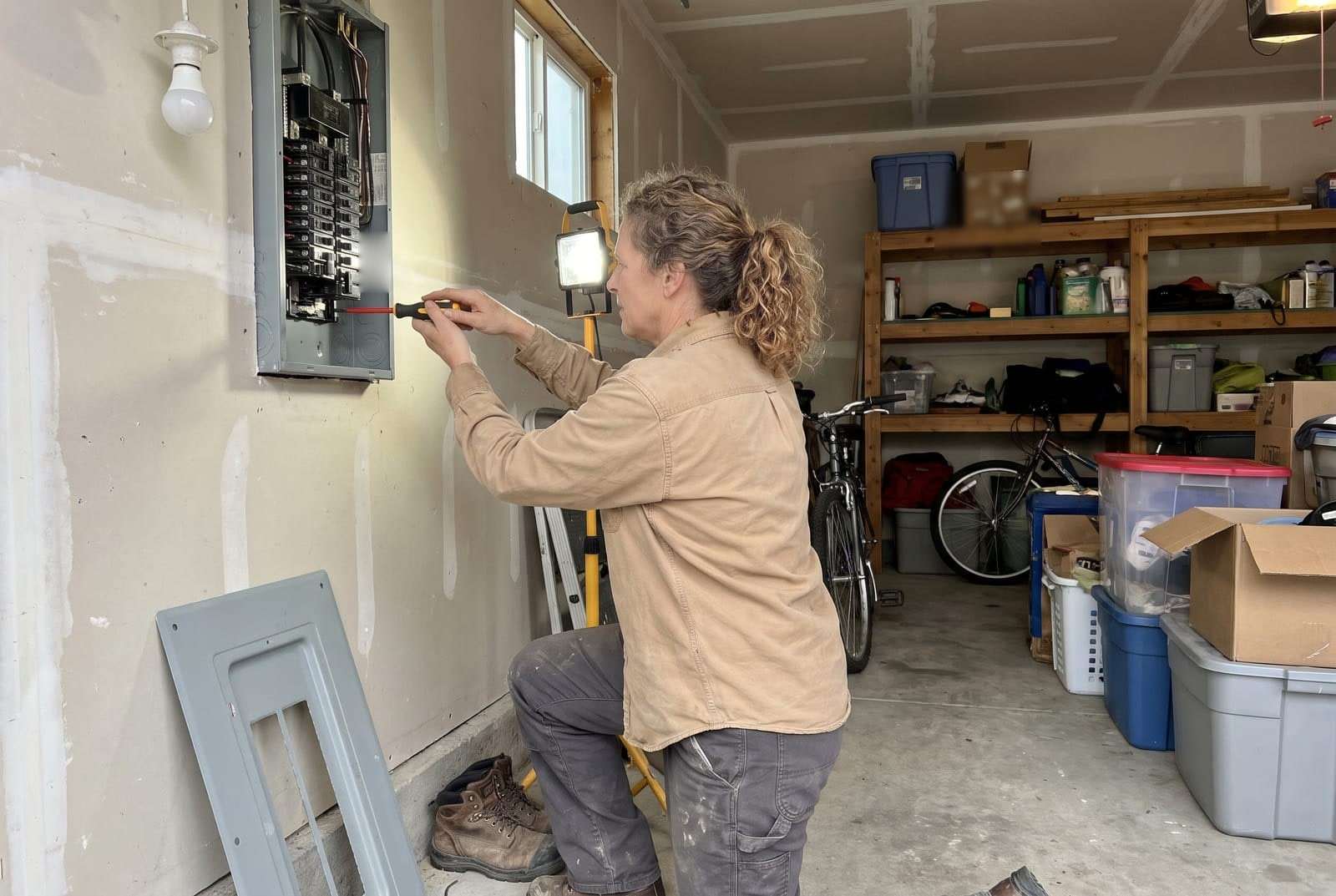
A good job leaves a directory with every circuit labeled by room and use, in plain words, so the right breaker can be found at a glance by you, the next owner or the next electrician, often in a hurry and by flashlight.
Behind the cover, it leaves wires routed neatly to their breakers, one wire under each terminal unless the breaker is made for two, and terminals tightened as the maker specifies. Little of that shows once the cover is back on, and all of it decides how well the panel ages.
Find Out What the Panel Can Carry
Whether the house needs a new panel, a larger service or room for a few more circuits, the answer starts with what it runs today.