
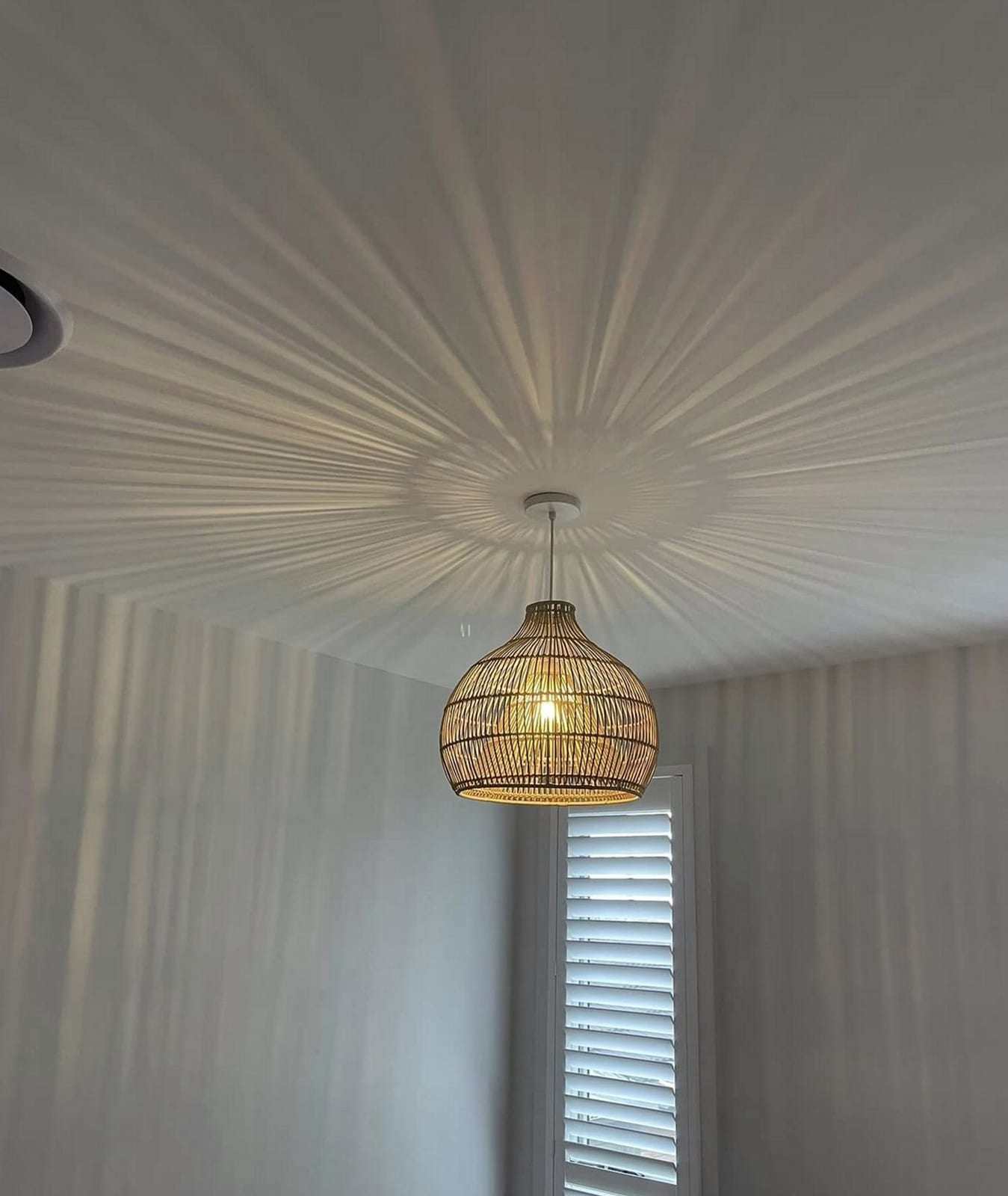
Lighting Installation, Inside and Out
A new light is the electrical work people notice every evening. Getting it right is mostly a matter of decisions made before the first hole is cut: where the light falls, what holds the fixture up, which switch controls it and whether the circuit can carry it.
Lighting Types and Where They Work
Each kind of fixture suits certain rooms and asks for a few decisions before the work starts.
Swipe left to see the rest of the table.
| Lighting type | Typical locations | Things to decide beforehand |
|---|---|---|
| Recessed lights | Kitchens, basements and hallways | Spacing, trim size, color temperature, and what is above the ceiling |
| Pendants | Over an island, a table or a stairwell | Hanging height, how many, and whether they share a dimmer |
| Chandeliers | Dining rooms, entries and stair halls | The fixture’s weight, the box to carry it, and its size against the room |
| Flush and semi-flush mounts | Bedrooms, hallways, closets and low ceilings | Light output, and how many on one switch |
| Ceiling fans | Bedrooms, living rooms and covered porches | A fan-rated box, blade span, a light kit and the controls |
| Under-cabinet and track lighting | Kitchen counters, a workbench, shelves or art | Where the power supply hides, and how the lights switch on |
| Outdoor wall and post lights | Entries, garage doors, decks and steps | A wet or damp rating, and a switch, timer or sensor |
Choices to Make Early in a Lighting Plan
Settling these points first keeps a plan from changing halfway through:
- What each room is for, and where it needs the strongest light
- The fixtures, with their weight and mounting instructions
- Where the switches go, and which lights share a switch or a dimmer
- One color temperature for every fixture in a room
- Dimmers, and bulbs made to work with them
- What is above the ceiling: an attic, insulation, a floor or ducts
- Whether the circuit can carry the new lights
Recessed Lighting Laid Out Before the First Cut
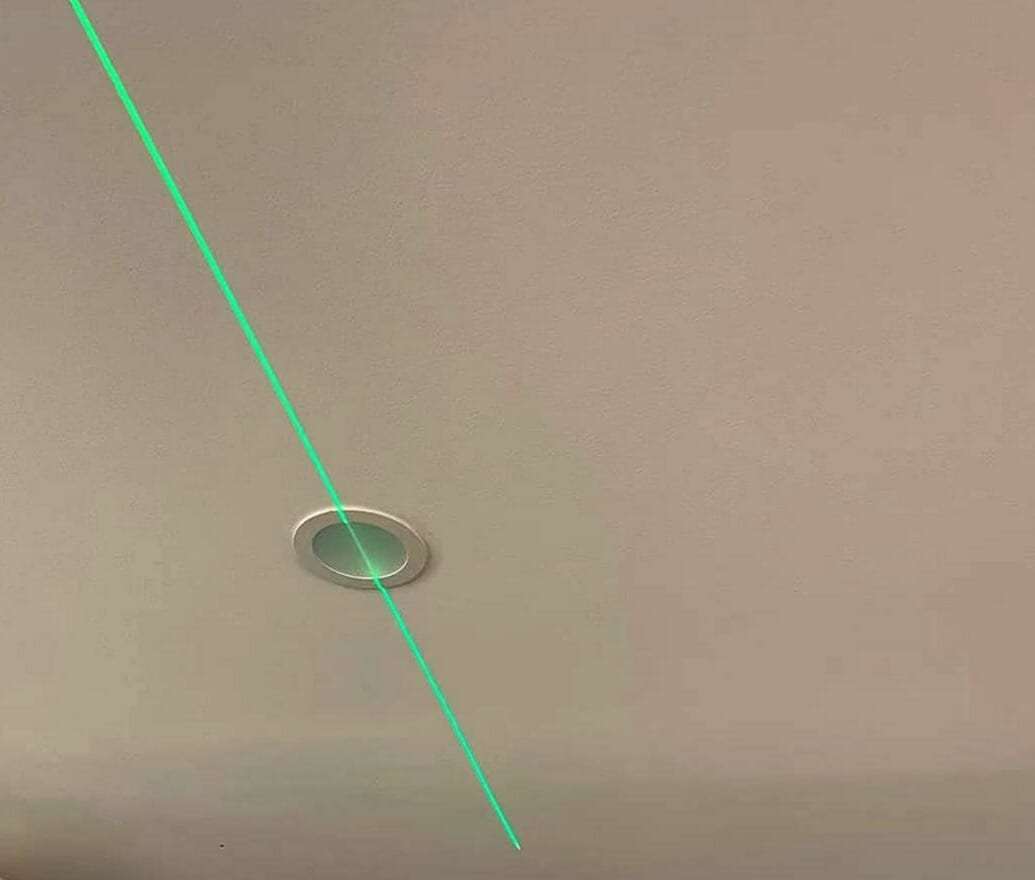
Recessed lights look best in straight, evenly spaced rows that relate to the room: the counters, the island, the walls and each other. The layout is marked on the ceiling first, often with a laser line, and checked against the joists, ducts and pipes above before an opening is cut.
In Akron’s older houses, many built before 1960, the ceiling itself can shape the plan. Plaster and lath crack when cut carelessly, and old framing often sits where a modern layout does not expect it. Slim LED fixtures that need no housing above the ceiling help where a joist or a duct is close.
Kitchens and Basements Need Their Own Circuits
A kitchen remodel or a finished basement usually calls for more light than the old circuits were planned for. New circuits for kitchens and basements are part of the installation work, so the lighting and its circuits are planned together. When the panel has no room left for them, a panel upgrade comes first.
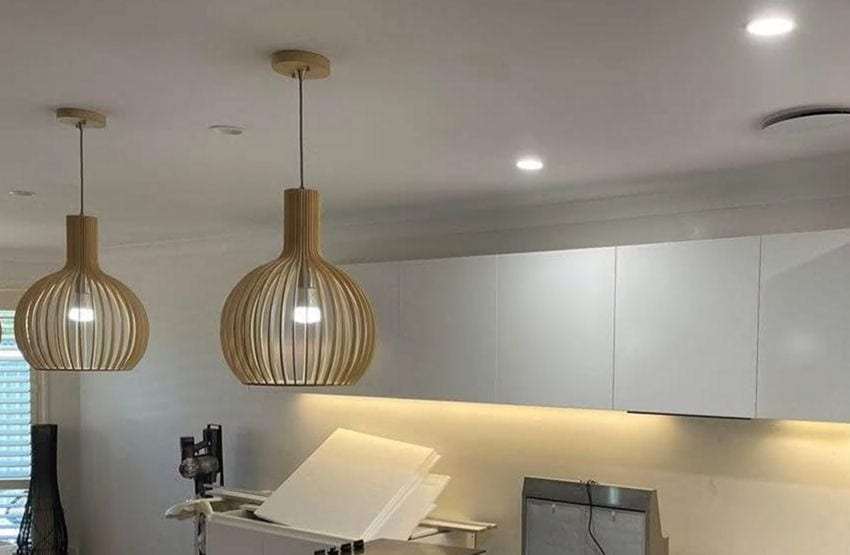
In a kitchen that often means recessed lights for general light, pendants over the island and an LED strip under the wall cabinets, each on its own switch or dimmer. In a basement, slim recessed lights or flush mounts keep the headroom.
Hanging a Chandelier or a Heavy Pendant
A chandelier or a large pendant is as much a mounting job as a wiring one. The ceiling box has to be rated for the fixture’s weight and fastened to the framing, and a heavy fixture may need a brace between the joists. Over a dining table, a fixture usually hangs about 30 to 36 inches over the tabletop.
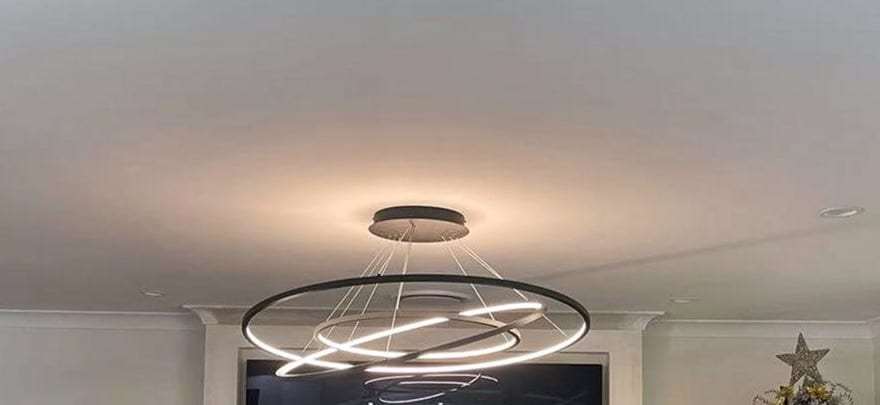
LED fixtures such as ring chandeliers draw a fraction of the power of the incandescent ones they replace.
Swapping an Old Ceiling Fixture
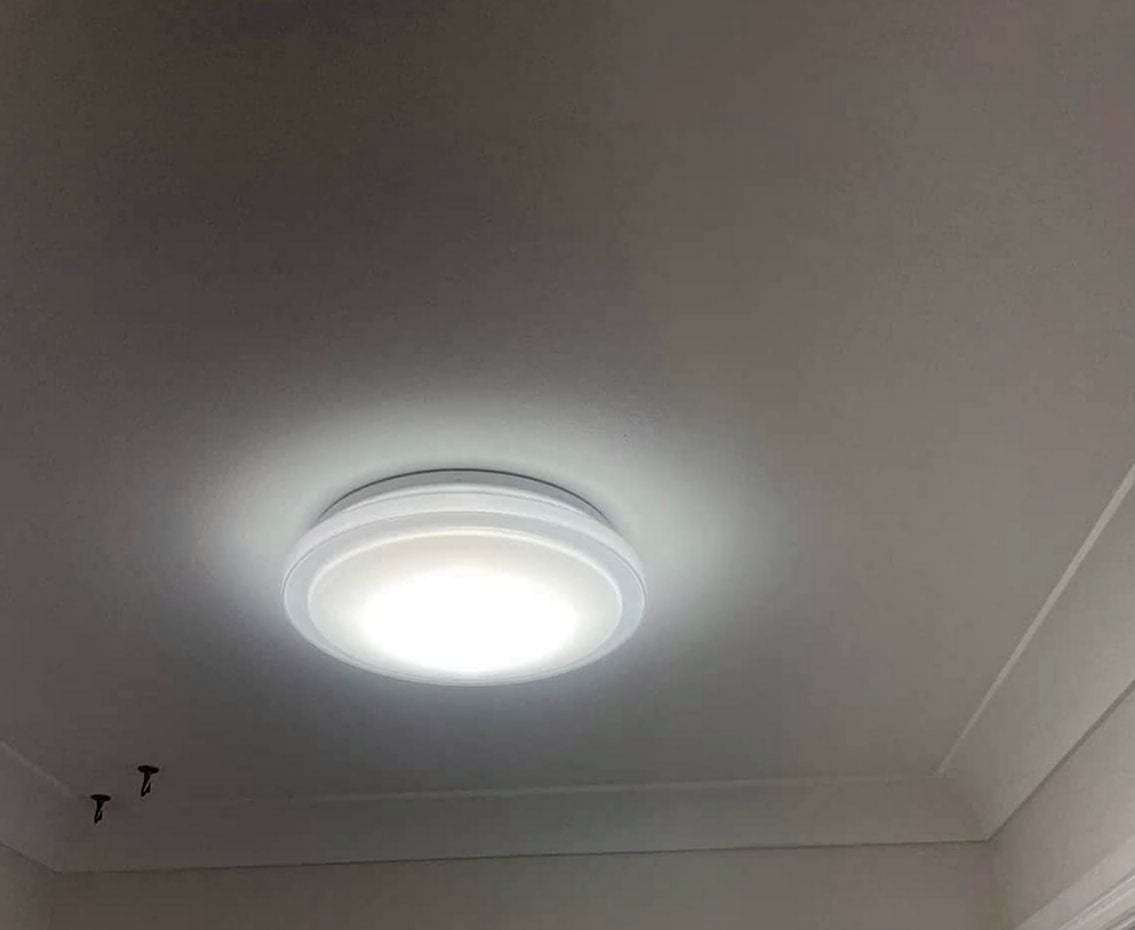
Replacing a dated fixture with an LED flush mount is one of the simpler lighting jobs, but the box behind the old fixture often tells a longer story: cloth-covered wire made brittle by decades of heat, no ground, or a box too small for its connections.
Those call for a wiring repair while the ceiling is open. Once the connections are sound, an LED fixture is easy on old wiring, since it runs far cooler than the bulbs it replaces.
Ceiling Fans for Bedrooms and Porches
A ceiling fan makes a room feel cooler on a humid summer night, and on a low reverse setting it pushes warm air down from the ceiling in winter. A fan with a built-in light can replace an old ceiling fixture, on one switch or on separate fan and light controls.
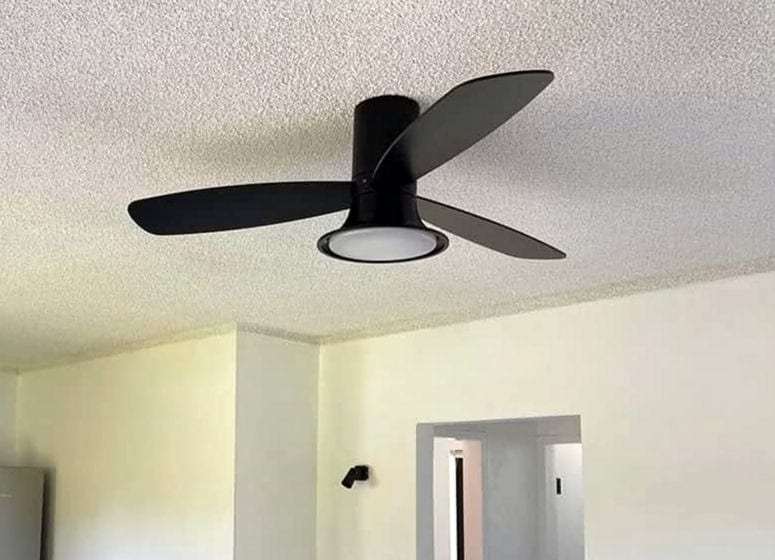
The blade span should suit the room, with the blades at least seven feet above the floor. On a covered porch, the fan must be rated for damp locations.
Outdoor Fixtures for Entries and Garages
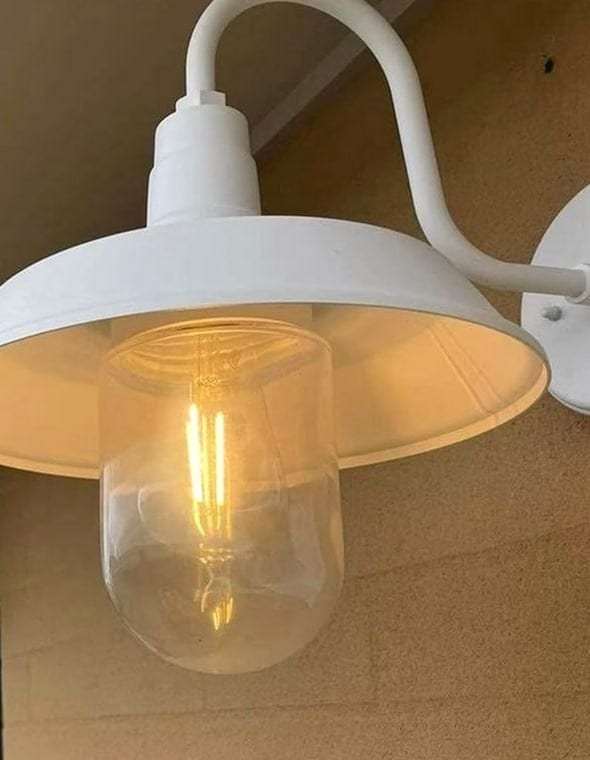
Outdoor fixtures light the way to the door, the garage and the back steps through rain, snow and freezing nights. Each needs a fixture rated for where it hangs, a sealed box on the wall and a sensible way to switch it: a switch inside the door, a timer, a photocell or a motion sensor.
A gooseneck barn light over a garage door or a pair of lanterns by the front door changes how a house looks at night as much as how it works. Lights on a detached garage or along a path mean cable run underground.
Fixtures, Dimmers and Bulbs
Why do LED lights flicker or buzz on a dimmer?
Usually because the dimmer was made for incandescent bulbs, which draw far more power; with LEDs it can flicker, buzz, refuse to dim low or leave a faint glow when off. A dimmer made for LED loads, paired with bulbs marked dimmable, puts it right. If several lights flicker together, with or without a dimmer, the cause is more likely a loose connection in the circuit.
Can recessed lights go in a ceiling under an attic?
Yes, with the right fixture. A recessed light under an attic sits against the insulation, so it must be rated for contact with insulation and sealed against air leaks, which keeps warm, damp air out of a cold attic in winter. Slim LED fixtures that need no housing above the ceiling are often the simplest choice.
Can a ceiling fan hang from the box that held a light?
Only if the box is made for a fan. A fan is heavier than most light fixtures and it moves, so it needs a box marked for fan support, fastened to the framing or to a brace between the joists. An ordinary light-duty box can loosen over time and let the fan wobble or come down.
What do damp-rated and wet-rated outdoor fixtures mean?
A damp-rated fixture suits a covered porch or a spot under deep eaves, where it meets humidity but not direct rain. A wet-rated fixture is made for an open wall, a post or anywhere rain and snow reach it. The rating is printed on the fixture’s label or box, and an indoor fixture should not go outside, even under cover.
What Fitting a New Light Involves
- The first visit. The property is walked, the outlets and circuits are tested, and you are told what was found and what the installation will involve.
- Layout. Fixture locations are marked, and the framing and the circuit are checked.
- Power off. The breaker goes off, and a tester confirms the circuit is dead.
- Openings and cable. Openings are cut for recessed lights or new boxes, and cable is run to each one.
- Fixtures and controls. Each fixture goes onto a box rated for its weight, and switches and dimmers are connected.
- Testing and labeling. Every light is tested through its dimming range, and a new circuit is labeled in the panel.
Talk Through a Lighting Plan
Start with the fixtures you have chosen or the rooms you want to light, and the boxes and circuits can be planned from there.