
Seasonal Electrical Maintenance for Akron Homes
Most electrical trouble builds slowly: a connection loosens, a cover cracks, an alarm’s battery fades. A short routine tied to the seasons catches most of it early, and in Northeast Ohio the weather sets the calendar: freezing winters with space heaters and heat tape, a spring thaw that puts water in basements, and humid summers with thunderstorms.
A Routine Matched to Your House
Not every task applies to every house. A home with a sump pump, a generator inlet or a fuse box has jobs that others do not, so the list starts from what yours has.
Plan Your Electrical Upkeep
The tasks come grouped by season, from quick checks to the jobs for an electrician.
Tick what your home has, then press the button.
Seasonal Tasks and Who Should Do Them
The core of the routine, with the reason each task matters in this climate and whether it is yours or an electrician’s:
Swipe left to see the rest of the table.
| Season | Task | Why it matters in this climate | DIY or call an electrician |
|---|---|---|---|
| Before winter | Give each space heater its own circuit, plugged into the wall | One heater on high uses most of a 15-amp circuit | DIY; an electrician if trips continue |
| Before winter | Check heat tape and holiday-light cords on outdoor GFCI outlets | Freezing nights crack old insulation, and wet connections trip the GFCI | DIY |
| Spring thaw | Walk the basement for water near outlets, cords and the panel | Snowmelt and spring rain find their way into basements | DIY; call if water reached the panel |
| Spring thaw | Test the sump pump and the outlet that feeds it | The pump works hardest while the ground thaws | DIY test; an electrician for a dedicated circuit |
| Summer storm season | Check plug-in surge strips, and consider whole-home protection | Thunderstorms send surges down the lines | DIY for strips; an electrician at the panel |
| Summer storm season | Note any breaker that trips when the air conditioning starts | Humid heat keeps air conditioners and dehumidifiers running together | An electrician |
| Autumn | Open the panel door and look for rust, scorching or outdated labels | Damp basements rust panels, and the heating season adds load | DIY look; an electrician for an inspection |
| Autumn | Test smoke and carbon monoxide alarms and replace their batteries | Furnaces and water heaters run with the windows shut until spring | DIY |
Getting Ready for Winter
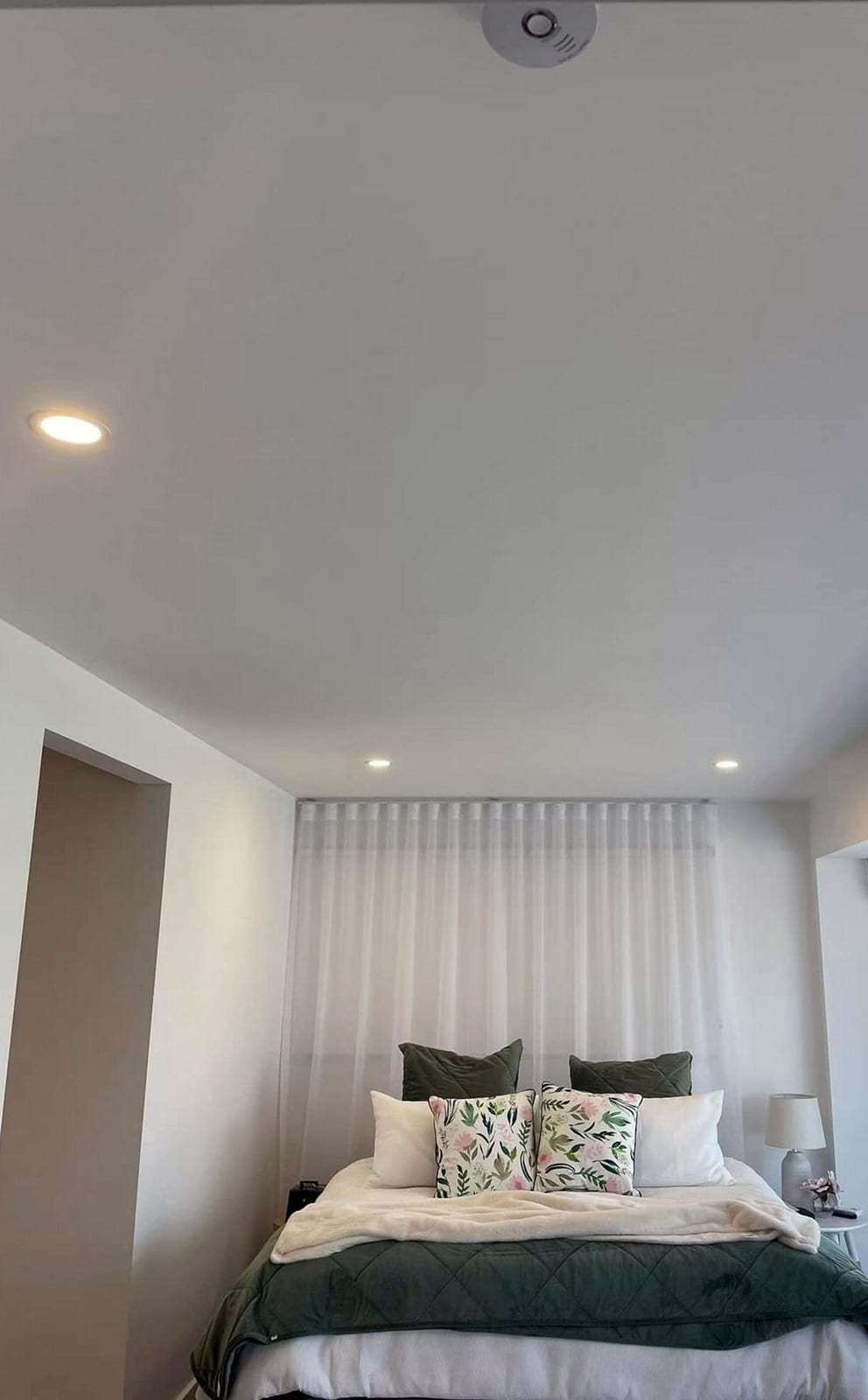
Before the furnace starts its long season, test every smoke and carbon monoxide alarm and change the batteries. Fuel-burning furnaces and water heaters run for months with the windows shut, and a carbon monoxide alarm on each floor, outside the bedrooms, is the only warning of a leak nobody can smell.
Winter loads are the other half of the job. A space heater on high draws most of what a 15-amp circuit can carry, so each one needs a circuit with little else on it.
- Test the alarms, replace the batteries and check the date on the back of each
- Plug each space heater straight into the wall, never into an extension cord or a power strip
- Feel a heater’s plug after an hour of use; a hot plug or a browned outlet needs a repair
- Look over heat tape for cracked insulation, and keep it on a GFCI outlet
- Use outdoor-rated cords for holiday lights, with the connections off the ground
After the Spring Thaw
Snowmelt and spring rain find their way into basements, and in many houses the basement holds the panel, the laundry circuits and the sump pump together. Walk it once the ground thaws:
- Look for water or damp near outlets, the panel and any cords on the floor
- Pour a bucket of water into the sump pit and watch the pump start and stop
- Make sure the sump pump plugs straight into its own outlet
- Press TEST and RESET on the basement, garage and outdoor GFCI outlets
- Check outdoor covers and boxes the freeze may have cracked
If water has reached the panel or an outlet, leave that circuit off until it has been checked.
Storm Season and Summer Loads
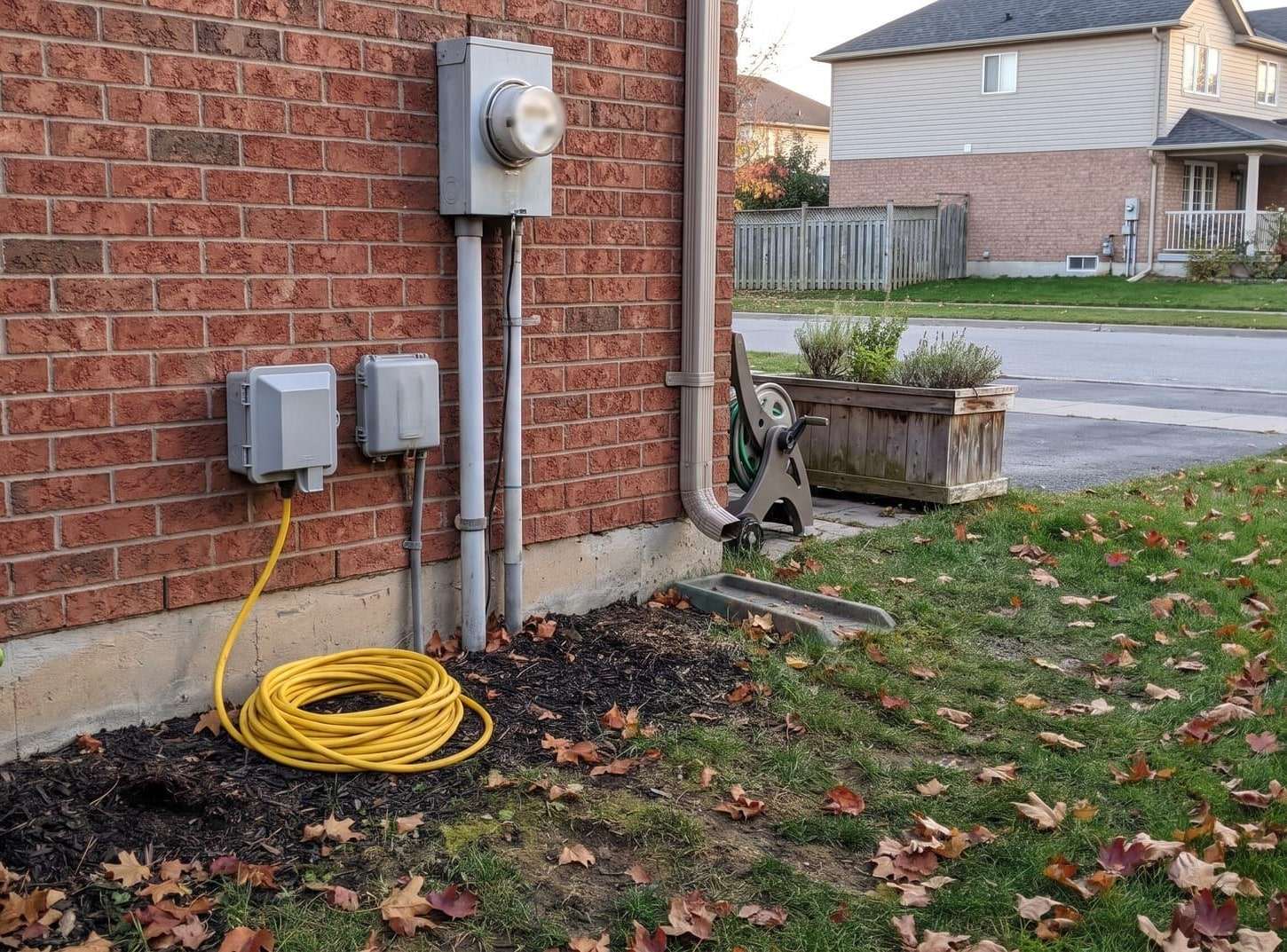
Spring and summer thunderstorms bring surges and outages. A whole-home surge protector, mounted at the panel, takes the brunt of a surge before it reaches the circuits, and plug-in strips handle what is left. A strip whose protection light has gone out has used itself up.
A portable generator should feed the house only through an inlet with an interlock or a transfer switch, never through a cord plugged into an outlet. Setting up that connection is part of our generator hookup work.
- Test-run the generator outdoors, well away from windows and doors
- Look over the inlet box, its cover and the cord for damage
- Replace surge strips whose protection light is out
- Note any breaker that trips when the air conditioning starts
Testing GFCI Outlets and AFCI Breakers
Both have a test button, and both can fail without showing it. GFCI outlets guard kitchens, bathrooms, basements, garages and the outdoors; AFCI breakers guard bedroom and living-area circuits in newer and renovated houses.
GFCI Outlets
- Plug in a lamp. Switch it on, so you can see the power go.
- Press TEST. The outlet should click and the lamp go out, along with any outlets further along the circuit.
- Note the other outlets. Any that went dead are protected by this GFCI; a small label saying so saves a search later.
- Press RESET. If the outlet does not trip on TEST, or will not reset, replace it: a GFCI that does not trip protects nothing.
AFCI Breakers
- Find them in the panel. They have a test button, and usually the letters AFCI on the handle or the label.
- Press TEST. The breaker should trip, its handle moving away from on.
- Reset it. Push the handle fully off, then on. A breaker that does not trip on TEST needs replacing.
Testing and Inspection Questions
How often should GFCI outlets and AFCI breakers be tested?
Most makers suggest pressing the test button once a month, on GFCI outlets and AFCI breakers alike. If monthly slips, test at each change of season and after any storm that tripped them. A device that fails its test should be replaced, not reset and trusted.
How often should smoke and carbon monoxide alarms be tested, and when should they be replaced?
Press each alarm’s test button once a month, and change the batteries at least once a year. Smoke alarms are replaced ten years after the date printed on the back. Carbon monoxide alarms wear out sooner, often after five to seven years, and the replacement date is printed on the alarm.
Is a wiring check worth it before buying an older house?
For a house built before 1960 it usually is. A home inspection notes what it can see; an electrician tests outlets and circuits, checks the grounding and opens the panel. Two-prong outlets or a fuse box are no reason to walk away, but they are worth understanding before the price is settled.
What does an electrician check during a panel inspection?
With the panel cover off, loose terminals are tightened, signs of heat or corrosion are noted, each breaker is matched against the wire it protects, and the grounding and bonding are checked. The inspection also shows whether the panel has the room and the capacity for what you plan to add.
Work to Leave to an Electrician
Some upkeep needs the panel cover off or a meter in hand. Our maintenance work covers inspecting panels, tightening loose connections, checking grounding, and looking over a home’s wiring before a sale or after a renovation.
That work matters most in older houses. Much of Akron’s housing went up before 1960, and behind the plaster many of those houses still have two-prong outlets, fuse boxes or small panels. An ungrounded outlet cannot give a surge strip the ground it needs, and replacing two-prong outlets with grounded or GFCI outlets is part of our repair and wiring work.
Upkeep Worth Handing Over
A panel inspection, a grounding check or a look over the wiring before a sale fits into any season, and autumn, before the heating season, suits it well.