
Surge Protection and Generator Hookups
Northeast Ohio’s spring and summer thunderstorms test a house’s wiring in two ways. A nearby lightning strike or a fault on the lines can send a surge through every circuit at once, and a downed line can leave the house dark for hours or days. A surge protector at the panel answers the first; a generator connected the right way answers the second.
Whole-Home Surge Protection at the Panel
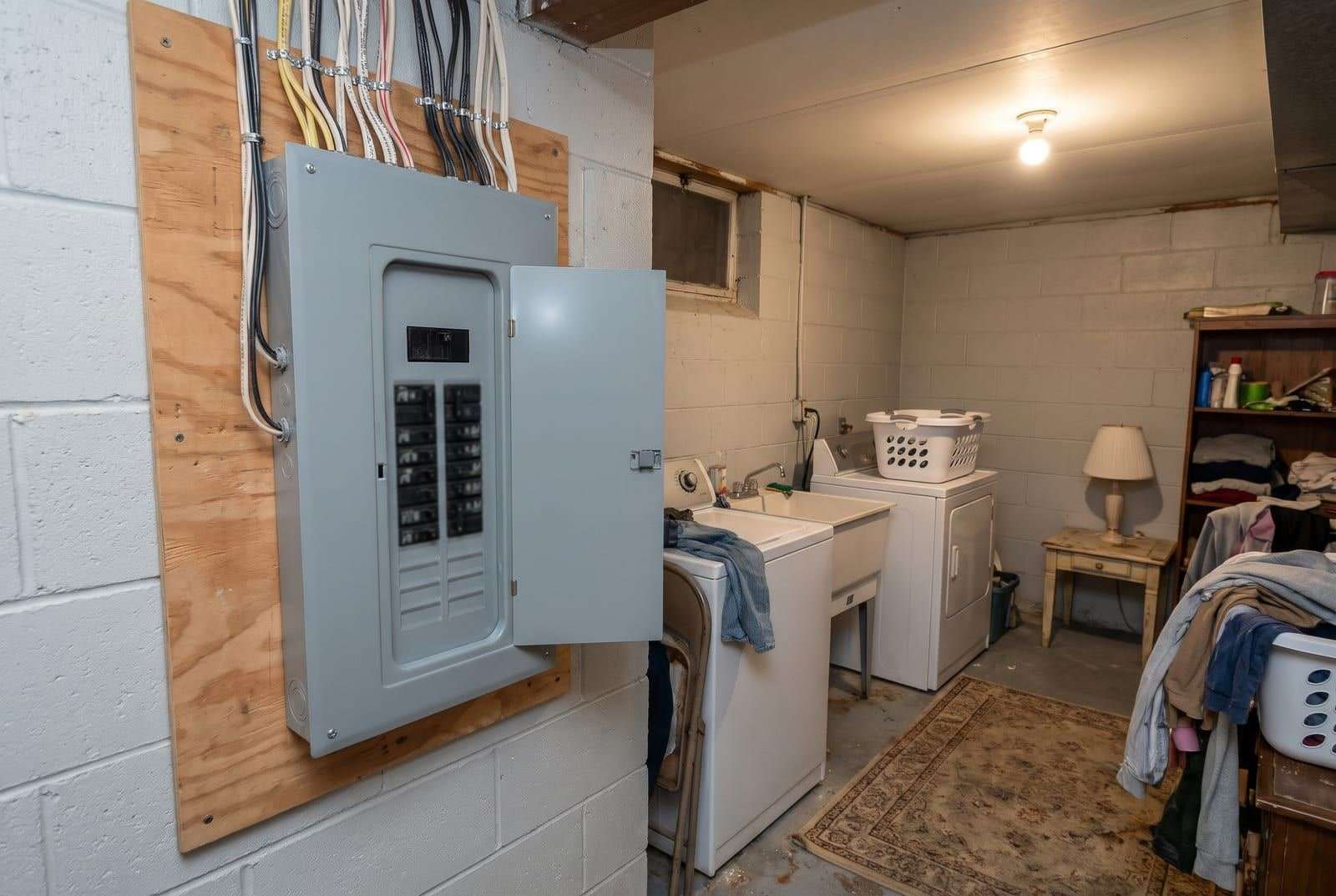
A whole-home surge protector mounts at the main panel on a breaker of its own. When the voltage spikes, it sends the excess to the grounding system almost instantly, before the surge spreads through the house. That covers what a plug-in strip cannot reach: the furnace and air conditioner controls, the range, the washer and dryer, and the garage door opener.
Surges also come from the utility switching its lines and from large motors cycling inside the house: smaller spikes that wear electronics down over time. A protector works only as well as the grounding behind it, so the ground is checked before one goes in. Most have an indicator light that shows whether they are still protecting. None makes a house immune to a direct strike.
Protection Options for Storms and Outages
Surge protection and backup power work in layers, and many houses combine two or three of them.
Swipe left to see the rest of the table.
| Protection option | What it protects | Best suited for |
|---|---|---|
| Whole-home surge protector | Every circuit, including the furnace, the range and other hardwired equipment | Any house, as the first layer |
| Plug-in surge strips | Only what is plugged into them | Computers, televisions and chargers, as a second layer |
| Cable and phone line protection | Modems, routers and televisions on those lines | A house where cable or satellite feeds sensitive equipment |
| Portable generator, inlet and interlock | The circuits you choose, switched on at the main panel | A household that can start a generator by hand |
| Portable generator and transfer switch | A set of circuits wired to the switch in advance | A panel with no interlock made for it |
| Standby generator and automatic transfer switch | Much or all of the house, with nobody needed at home | A house that cannot go without power, such as one with medical equipment |
Generator Hookups and the Order of Switching
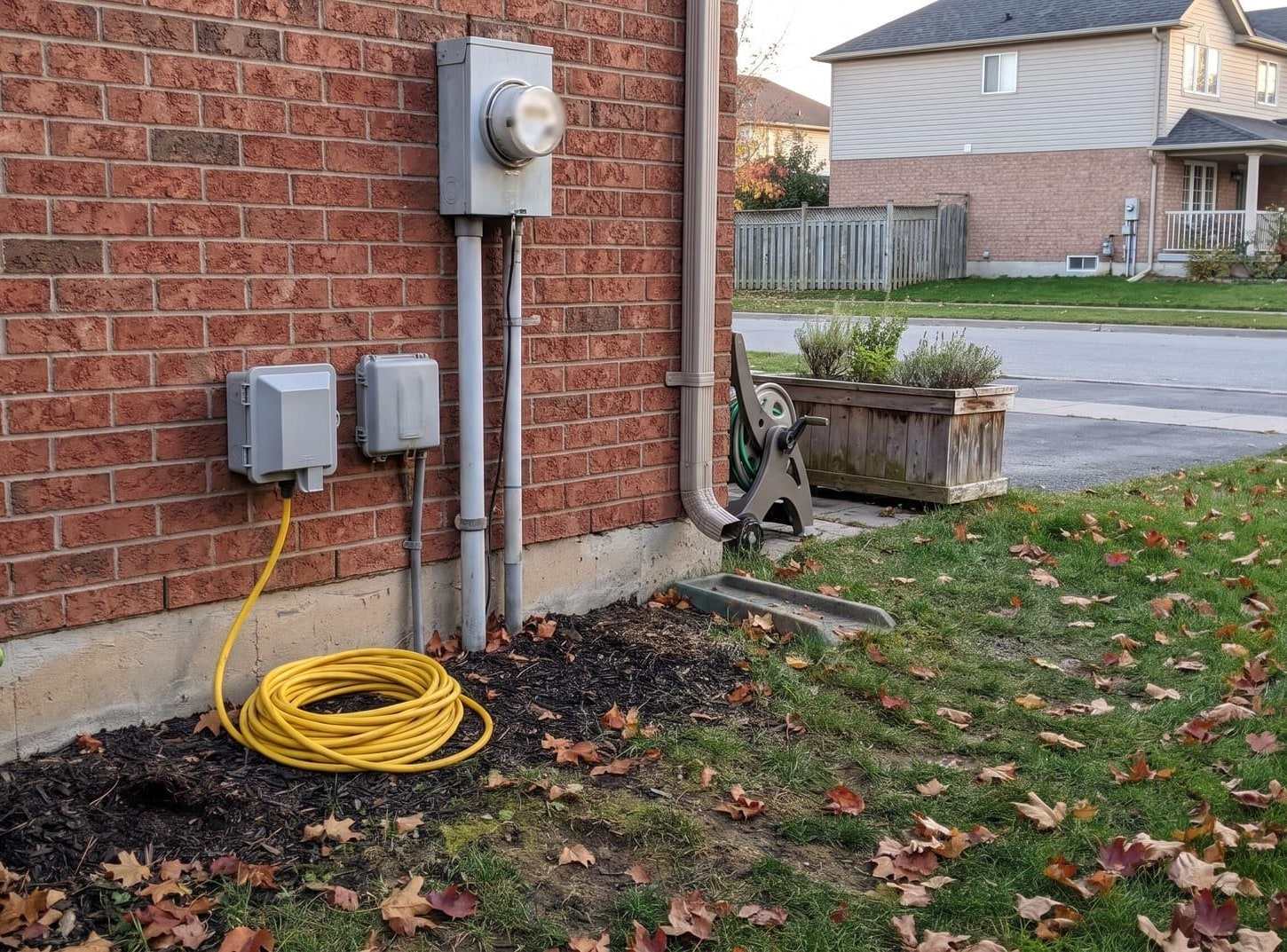
A generator hookup gives the generator one safe way into the house: a power inlet box on an outside wall, like a weatherproof outlet in reverse, a cord sized to the generator, and an interlock or a transfer switch at the panel that keeps the house off the utility lines while the generator runs.
During an outage the order matters. The generator runs outside, well away from doors, windows and vents, and never in a garage, even with the door up. With the cord connected to the inlet, the main breaker goes off and the interlock slides over before the generator breaker goes on, and the chosen circuits come on one at a time. When utility power returns, the steps run in reverse.
Why Back-Feeding Through a Dryer Outlet Is Dangerous
Some people connect a generator with a cord that has a plug on each end, pushed into a dryer outlet so the generator feeds the house wiring backward. Electricians call it a “suicide cord” for good reason: once the generator runs, the prongs on its loose end are live.
The greater danger is to people you never see. If the main breaker is left on, the generator’s power flows out through the meter to the utility transformer, which steps it up to thousands of volts on the line, where a line worker who expects a dead line can be electrocuted. When utility power returns, it can also wreck the generator or start a fire. An inlet with an interlock or a transfer switch rules all of that out.
Generators, Switches and Surge Strips
Does a whole-home surge protector replace plug-in surge strips?
No, the two work together. The device at the panel stops large surges arriving from outside before they spread through the house. A good plug-in strip then catches what is left, along with the small spikes that start inside the house, right where a computer or a television plugs in. A strip needs a grounded outlet to do its job well.
Is a portable or a standby generator the better choice?
It depends on how you want to get through an outage. A portable generator costs less and runs the essentials through an inlet and interlock, but someone has to wheel it out, fuel it and connect it, often in bad weather. A standby generator runs on natural gas or propane and switches over on its own within seconds, even with nobody home, and it costs more and needs regular service.
Which is better, an interlock or a transfer switch?
Both keep a generator from back-feeding the utility lines. An interlock is a plate on the main panel that lets any circuit run on the generator, within its output, but it needs a panel it is made for. A manual transfer switch is a small separate panel holding circuits chosen in advance, which is simpler to use in the dark. Standby generators use an automatic transfer switch.
What can a portable generator run during an outage?
Add up the running watts of what you want on, from each appliance’s label, and keep the total under the generator’s running watts. Motors in a refrigerator, a sump pump or a furnace blower draw two to three times their running watts as they start, so bring them on one at a time. A mid-sized portable unit usually covers a gas furnace, the sump pump, the refrigerator and some lights; central air and electric ranges, water heaters and dryers need far more.
What to Gather Before Asking About a Generator Hookup
A few details make the first conversation about a hookup far more useful:
- The generator’s make and model, and its running and starting watts
- A photo of its 240-volt outlet, which sets the size of the inlet and cord
- Portable or standby, owned or still to be chosen, and the fuel it runs on
- A photo of the main panel with the door open, showing its label
- The circuits you cannot do without, such as the furnace, the sump pump and the refrigerator
- Where the generator will sit when it runs
- The outside wall closest to the panel
Installing a Generator Inlet and Interlock
- The first visit. The property is walked, the outlets and circuits are tested, and you are told what was found and what the hookup will involve.
- Matching the parts. The inlet, cord and generator breaker are sized to the generator’s outlet, and the panel is checked for an interlock that fits it.
- Choosing the spot. The inlet goes where the generator can run safely on a short cord.
- Permit where needed. Many panel jobs, a hookup among them, need a permit and an inspection from the local building department.
- Installation. With the power off, the inlet, the cable, the generator breaker and the interlock or transfer switch go in; a whole-home surge protector fits naturally into the same job.
- Testing and labels. The generator is started, the chosen circuits are checked on its power, and the generator breaker is labeled in the panel.
Keeping It Ready Between Storms
A generator that sits untouched all year is the one that will not start when it is needed. Running it under load every month or two, keeping fresh fuel or a stabilizer in a gasoline unit, and checking the surge protector’s indicator after a storm belong with the storm-season checks in the seasonal maintenance guide.
Ask About a Hookup or a Surge Protector
Have the generator’s model and a photo of the panel on hand, and the hookup can be planned around them from the start.