
Choosing a Panel or Service Upgrade
A panel upgrade can mean several different jobs, from replacing a worn panel on the existing service to bringing a larger service in from the street. Which one a house needs depends on what it runs now and what it will run next. No two houses price the same, but what moves the cost is predictable, and knowing it makes any estimate easier to read.
The Difference Between a Panel and a Service
The service is what the utility delivers: the wires from the pole or the street, the meter base on the outside wall, and the main breaker that sets how much the house can draw, in amps. The panel is the box of breakers that divides that power into circuits. A bigger service adds capacity; a bigger panel adds room for circuits.
Much of Akron’s housing went up before 1960, when 60 or 100 amps and a fuse box or a small panel were enough. Central air, an electric range and an EV charger are a different load, and the question is whether the house needs more capacity, more room, or both.
Panel replacements and service upgrades are part of our panel upgrade work, and every circuit in a panel we leave is labeled, so the next person can read it at a glance.
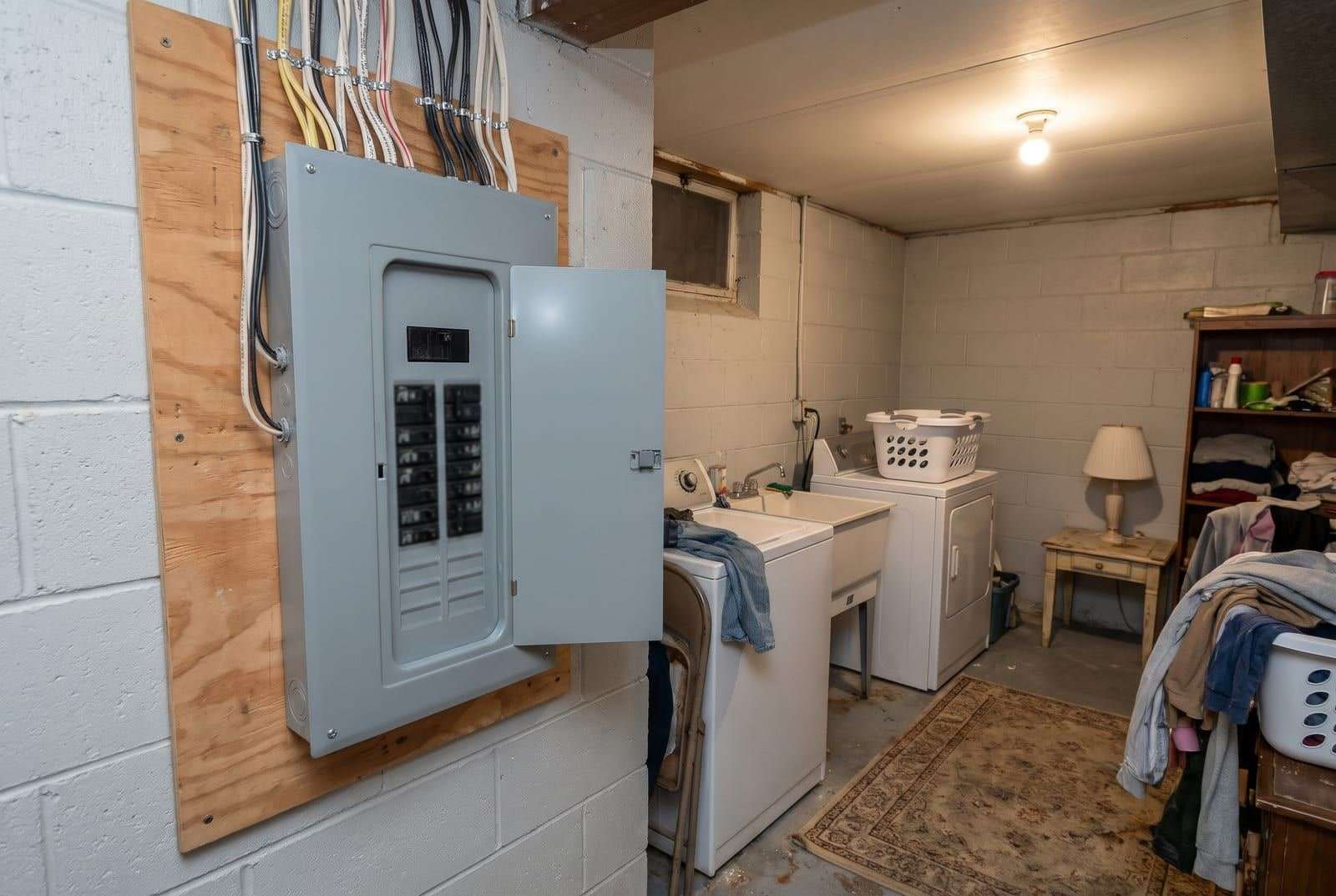
Compare the Options for Your House
Most upgrades come down to a new panel, a larger service, a subpanel or managing the load the house already has, alone or combined.
Compare Upgrade Options
The options that fit come back side by side: what each involves, what moves its cost and how long it takes.
Tick your priorities, then press the button.
How the Upgrade Options Differ
Each option solves a different problem, and some are often combined, such as a service upgrade with a surge protector, or a subpanel with an EV circuit.
Swipe left to see the rest of the table.
| Option | What it involves | Best suited for | Main cost factors |
|---|---|---|---|
| Panel replacement, same service | A new panel and breakers on the existing service, the circuits moved over and the grounding checked | A worn or full panel, or a fuse box on a service big enough for the house | Panel size and spaces, AFCI and GFCI breakers, repairs found behind the cover |
| Service upgrade | A larger service, such as 100 to 200 amps: a new panel, meter base and service cable, with the utility’s disconnect and reconnect | Central air, a heat pump, an electric range or an EV charger on a small service | The new service size, the meter base and mast, the permit and inspection |
| Subpanel | A second, smaller panel fed from the main one and set near the new work | A finished basement, a kitchen remodel or a garage with several new circuits | The feeder’s size and length, room in the main panel for its breaker |
| Load management | A device that slows or pauses a large load, usually an EV charger, when the house nears its limit | An EV charger on a service a load calculation shows is nearly full | The device, the loads it controls, the wiring to them |
| Whole-home surge protector | A protector at the panel that diverts surges before they reach the circuits | Any panel or service job, added while the panel is open | Room in or beside the panel |
Deciding What Your House Needs
Each step narrows the next:
- List the loads. What the house runs now and what you expect to add: central air, a heat pump, an electric range, an EV charger.
- Find the service size. The number on the main breaker gives it in amps. A fuse box usually means a smaller, older service.
- Note the trouble. Breakers that trip with ordinary use, lights that dim when the air conditioning starts, a panel with no empty spaces.
- Have a load calculation done. An electrician adds up the house’s loads the way the electrical code sets out and compares the total with the service. That number decides more than any rule of thumb.
- Match the option to the gap. Short of room: a new panel or a subpanel. Short of capacity: a larger service, or load management. Short of both: a larger service with a larger panel.
- Plan the extras together. A surge protector, a generator inlet or an EV circuit is easiest to add while the panel is open.
The first visit to a job walks the property and tests the outlets and circuits, so the choice rests on what the house actually has.
Making Room for an EV Charger
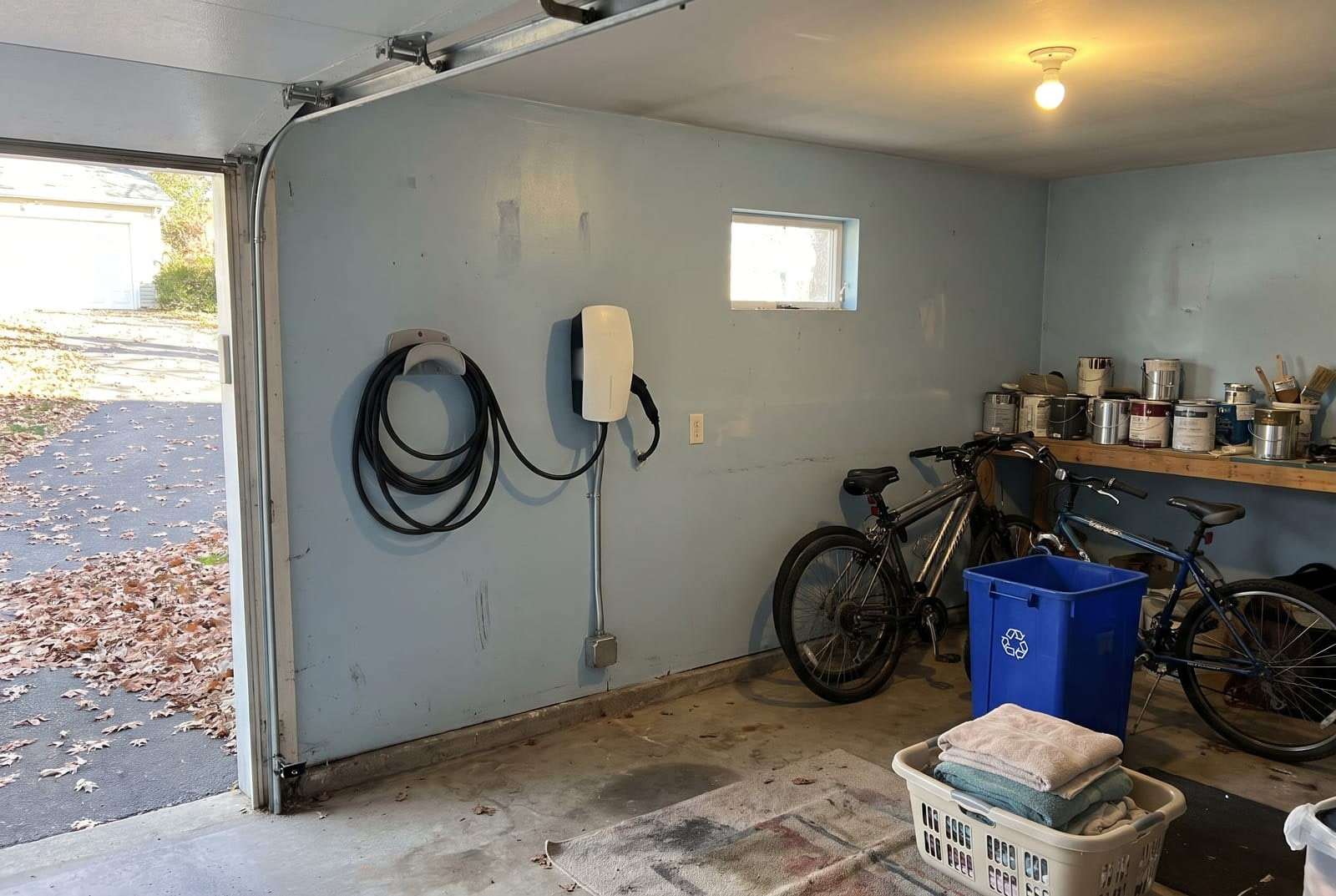
A Level 2 charger runs at 240 volts, usually on a 40- or 50-amp circuit, and can draw that for hours. On a 200-amp service with room in the panel, it is often a matter of one new circuit. On a 100-amp service already carrying central air and an electric range, it can tip the balance.
That is where load management helps. An EV energy management device slows or pauses the charger when the range, the dryer and the air conditioning run at once, which can let a smaller service carry a charger without an upgrade. A load calculation shows which route fits, and EV charger wiring is part of our installation work.
What Drives the Cost of an Upgrade
Each of these moves the cost, and each has something to check in your own house:
Swipe left to see the rest of the table.
| Factor | How it affects the cost | What to note about your home |
|---|---|---|
| Service size | A larger service brings a new meter base, heavier cable and the utility’s involvement: the largest single step | The number on the main breaker, and what you plan to add |
| Meter base and service entrance | An old meter base, mast or weatherhead is often replaced with the panel | Whether the wires arrive overhead or underground |
| Panel location | Replacing a panel in place is simpler than moving it, and some older locations are no longer allowed | A panel in a closet or a bathroom, or without clear space in front |
| Grounding and bonding | Older houses often need new ground rods or bonding to the water and gas piping | Two-prong outlets and a fuse box usually mean grounding work |
| Breakers | AFCI and GFCI breakers cost more than standard ones, and current codes call for them on many circuits | How many circuits the house has, and which rooms are changing |
| What the old panel hides | Scorched wires, doubled-up breakers or old repairs found once the cover is off add work | Outlets or lights that already act up |
| Permit, inspection and the utility | Many panel and service jobs need a permit and an inspection from the local building department, and a service change needs the utility’s disconnect and reconnect | Days when the house can be without power for part of the day |
Questions on Choosing an Upgrade
What changes the cost of a panel upgrade the most?
Whether the service changes. A new panel on the existing service is one job; a larger service adds a meter base, heavier cable, grounding work and the utility’s disconnect and reconnect. After that come the panel’s location, the wiring behind it and the number of AFCI and GFCI breakers.
When does a subpanel make more sense than a new main panel?
When the main panel is sound and the service has capacity to spare, but there is no room for new circuits near the work. A subpanel keeps the new runs short. It adds spaces, not capacity: if the service is already near its limit, a subpanel alone will not solve it.
How long does a panel or service upgrade take?
In general, a panel replacement on the existing service is about a day of work, with the power off for much of it. A service upgrade is a day or two of work, but the scheduling often takes longer, since the inspection and the utility’s reconnect have to line up.
Does the utility need to be involved?
For a service upgrade, yes. In most of the Akron area the utility is Ohio Edison, which disconnects the service before the work and reconnects it afterward, usually once the inspection has passed. A panel replacement on the same service can still need the power cut at the meter.
What to Ask When Comparing Estimates
Whoever does the work, these questions show how the job will go:
- Will you do a load calculation, and can I see the result?
- Does the plan change the service size, and what happens at the meter?
- Will the job need a permit and an inspection, and who arranges them?
- How long will the power be off, and on which days?
- What happens if the old wiring needs repairs once the cover is off?
- Will there be spaces left for future circuits?
- Will every circuit be labeled when the work is done?
Planning a Panel or Service Upgrade
Once you know what the house needs to run, a visit turns these options into a plan and an estimate for your own panel.